
FRP Roof Fan
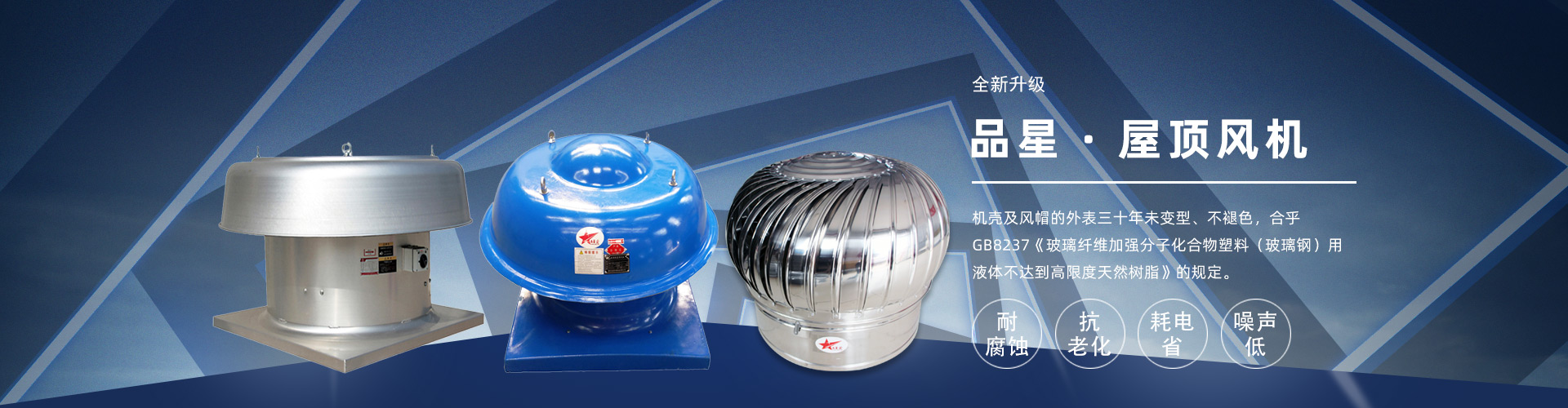
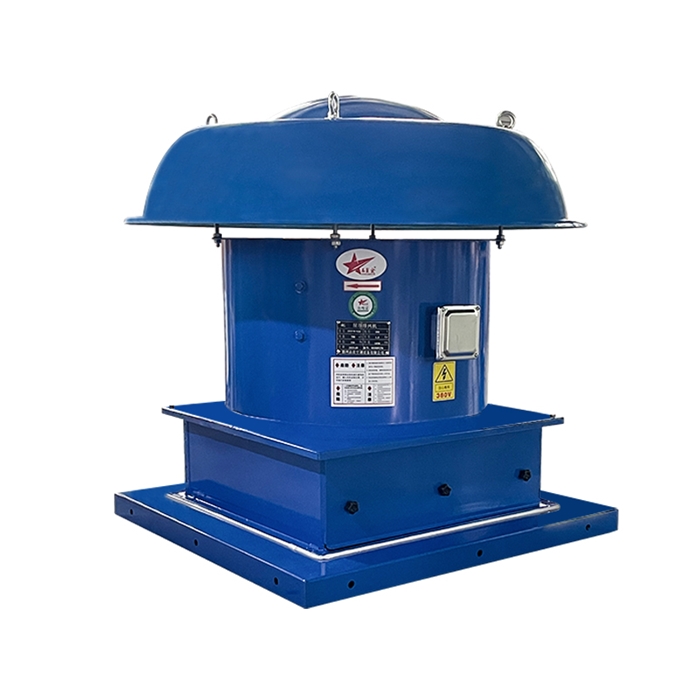
FRP roof fan is a common type of roof ventilation equipment, widely used in various fields due to its excellent performance.
Definition and Working Principle
FRP roof fan refers to a roof-mounted fan whose main components such as the casing and impeller are made of fiberglass reinforced plastic (FRP). Driven by a motor, the impeller rotates to accelerate air flow, realizing the exchange of indoor and outdoor air, and achieving the purposes of ventilation, air change, dust exhaust, and cooling.
Characteristics
Lightweight yet High Strength
The density of FRP is only 1/4 to 1/3 that of metal, but its strength is comparable to that of steel. This makes the fan lightweight, easy to install and transport, and also reduces the load on the roof.
Excellent Corrosion Resistance
The resin matrix of FRP can be customized with acid and alkali resistant formulas, which can effectively resist the erosion of corrosive gases and liquids such as acids, alkalis, and salts. It is suitable for highly corrosive environments such as chemical, metallurgical, and electroplating industries.
Low Noise
Due to its excellent structural damping characteristics and high dynamic balance accuracy of the impeller, the operating noise of FRP roof fan is generally low, usually below 65 decibels, which can meet the requirements of places with high noise standards.
High Efficiency and Energy Saving
It has a large optimization space for blade profile and high surface finish, resulting in low operating resistance and excellent energy efficiency. The specific power consumption per unit air volume of first-class energy efficiency products can reach 0.22-0.26W/(m³/h), which is better than most metal fans.
Low Maintenance Cost
FRP is not easy to rust or age, has a long service life, and does not require frequent anti-corrosion and anti-rust maintenance. Its maintenance cost is about 30% lower than that of galvanized steel sheet fans.
Types
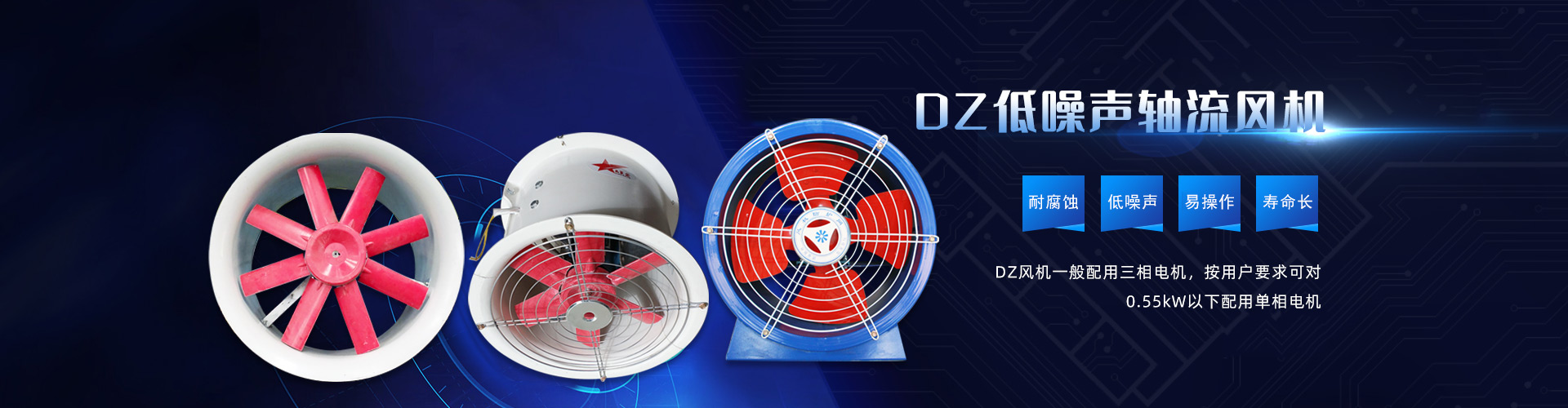
Axial Flow Roof Fan
Represented by the DWT-I type FRP axial flow roof fan, it has the characteristics of large air volume and low total pressure, suitable for general ventilation and air change occasions. The fan sizes range from 3# to 24#, with air volume from 1450 to 175000 m³/h and total pressure from 62 to 287 Pa.
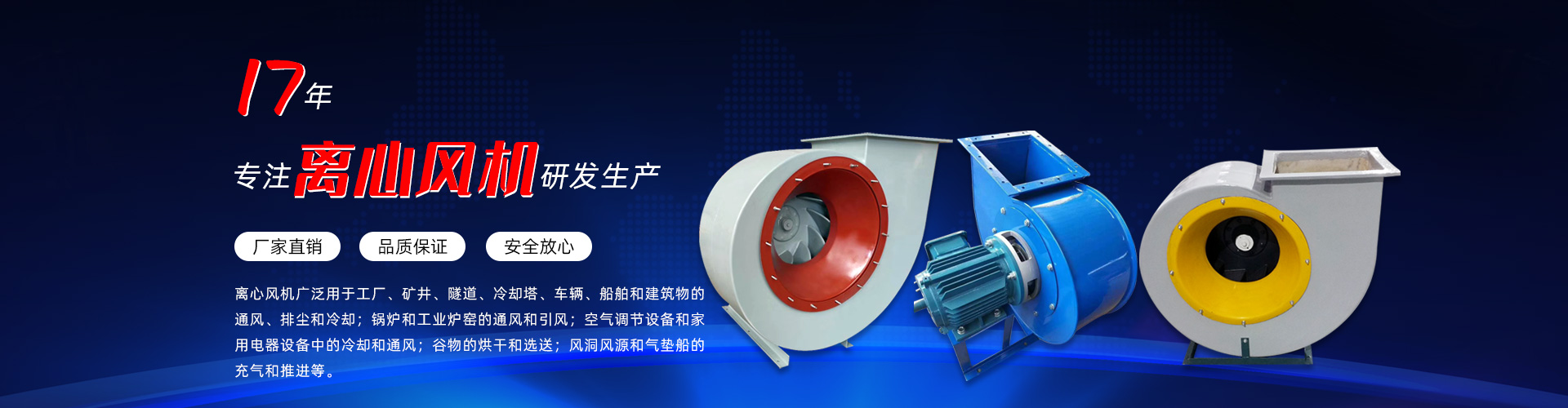
Centrifugal Roof Fan
Taking the DWT-II type FRP centrifugal roof fan as an example, it has high pressure and relatively small air volume, suitable for places that require high pressure to overcome ventilation resistance. The series air volume is 1000-431436 m³/h, and the total pressure is 100-1072 Pa.
Low-Noise Roof Fan
Such as the BDW-87-3 type FRP low-noise roof fan, its noise can be limited to within 65 decibels, suitable for places with strict noise requirements, such as hotels, schools, and hospitals.
Application Scenarios
Chemical and Metallurgical Industries
Due to the highly corrosive environment, there is a high demand for the corrosion resistance of fans. FRP roof fans are widely used in these industries with their excellent corrosion resistance, accounting for 52.3% of the ventilation equipment market in high-corrosion working conditions such as chemical and metallurgical industries.
Food and Pharmaceutical Fields
This field has strict requirements for health and safety. FRP fans are environmentally friendly and not easy to breed bacteria, which can meet the production environment requirements of the food and pharmaceutical industries. The market demand is increasing by 24.7% year-on-year.
Cold Chain Logistics Industry
With the acceleration of cold storage construction, the demand for FRP roof fans in the cold chain logistics field is constantly increasing, and their application proportion has reached 58.7%. They can be used for ventilation and air change in cold storages to keep the air fresh in the storage.
Emerging Scenarios such as Data Centers and Intelligent Warehousing
These places have high requirements for indicators such as energy efficiency and noise of ventilation equipment. FRP roof fans are rapidly gaining market share in emerging scenarios due to their advantages of high efficiency, energy saving, and low noise.
上一条:玻璃钢屋顶风机
下一条:铝制离心屋顶风机 风量大噪音低
 鲁公网安备 37142802000810号